Confidence Grows When Products Become Easier to Understand
==========================================================
Physical marketing materials can play an important role in this transition. Packaging, brochures, posters, product cards, retail displays, and printed catalogs already place product information directly in front of customers. Traditionally, these materials have been limited by the amount of information that can fit on a physical surface.
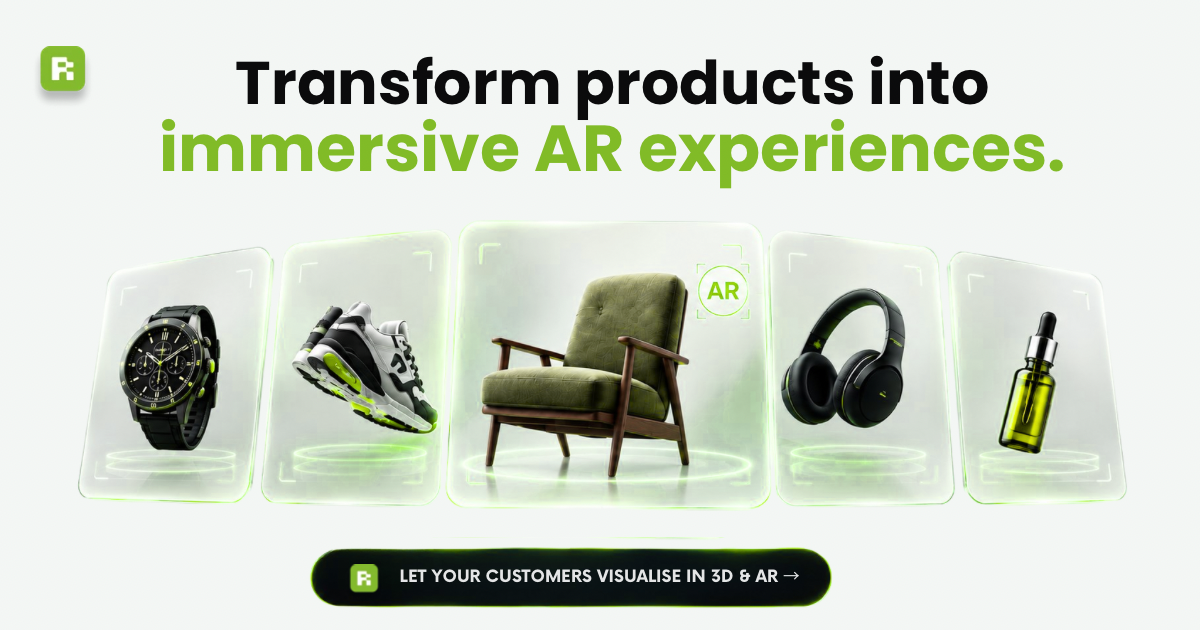
A augmented reality qr code can create another layer of interaction between that physical material and a smartphone. A customer can scan a code and move from a printed product reference to a digital experience without searching for the brand separately. Depending on the experience, that connection can lead to interactive product visualization, additional specifications, demonstrations, videos, or other digital content.
This approach makes the physical product touchpoint more useful without requiring the printed material itself to contain every detail. A package, for example, can remain visually clean while the connected digital experience provides additional information. A retail display can introduce a product while giving interested shoppers another way to explore it.
The important part is the continuity between the physical and digital environments. Customers do not necessarily have to abandon the context in which they discovered the product. They can use their phones to extend that experience and investigate further.
Why Visual Exploration Can Reduce Uncertainty
---------------------------------------------
Confidence often develops when uncertainty decreases. If a shopper understands what a product looks like, how it relates to its surroundings, and what its key features mean, there may be fewer unanswered questions standing between interest and action.
This is where three-dimensional product experiences become valuable. A 3D representation can allow customers to inspect an object from multiple perspectives rather than depending on a fixed collection of photographs. Rotating, viewing, and positioning an item can make certain characteristics easier to understand.
For businesses with large collections of products, creating this type of content has historically required significant resources. Photography, modeling, rendering, and technical implementation can make interactive visualization difficult to produce at scale. Newer workflows are making it increasingly practical to transform existing visual assets into digital product experiences.
The ability to convert image to 3D model can help brands make better use of product photography and existing image libraries. Instead of treating every product image as the final piece of content, businesses can view those assets as starting points for more interactive experiences. This can be particularly useful for companies managing catalogs containing many products or frequent product updates.
Making Product Information Easier to Process
--------------------------------------------
Customers do not necessarily want more information. In many cases, they want information that is easier to understand.
A product page containing several paragraphs of specifications may technically answer important questions, but customers still need to process that information and connect it with a physical object. Interactive visualization can support that process by giving shoppers something they can see and explore.
Consider a customer choosing a home furnishing item. Dimensions listed in centimeters or inches provide useful facts, but those numbers may not immediately communicate how the item will feel in a particular room. Seeing the product within a physical environment can create a more understandable reference point.
The same principle applies across many categories. Electronics, furniture, fashion accessories, consumer goods, equipment, packaging, and decorative products can all benefit when customers have a clearer way to inspect what they are considering.
This does not mean replacing conventional product descriptions. Measurements, materials, specifications, pricing, and other factual information remain important. Interactive experiences can work alongside these details by helping customers interpret them through visual context.
Physical Spaces Can Answer Digital Shopping Questions
-----------------------------------------------------
The relationship between physical and digital commerce is becoming less one-directional. Physical stores can send customers toward digital experiences, while digital product content can help customers understand physical products more clearly.
A shopper might encounter a product on a shelf and use their phone to explore it in greater detail. Another customer may see packaging at home and scan it to access additional information. A showroom visitor might use an interactive experience to visualize variations that are not physically available at that location.
These scenarios demonstrate that interactive product content does not have to belong exclusively to online stores. It can operate across touchpoints, creating continuity between advertising, packaging, retail environments, websites, and post-purchase experiences.
The physical product becomes a starting point rather than the endpoint of communication.
Information Can Become an Experience
------------------------------------
Menus, catalogs, brochures, and product displays all share a common limitation: they traditionally present information in a fixed format. Digital layers can make these formats more responsive.
For example, augmented reality restaurant menus can demonstrate how digital overlays may add richer visual information to a familiar physical interface. Instead of simply reading a name and description, customers can potentially access visual content that helps them understand what they are choosing.
The broader idea extends beyond restaurants. Product catalogs, printed instructions, retail displays, event materials, and promotional surfaces can all become gateways to interactive content.
This creates an opportunity for brands to rethink how information is delivered. Instead of asking customers to absorb everything at once, physical materials can provide the initial context while digital experiences offer deeper exploration when the customer wants it.